

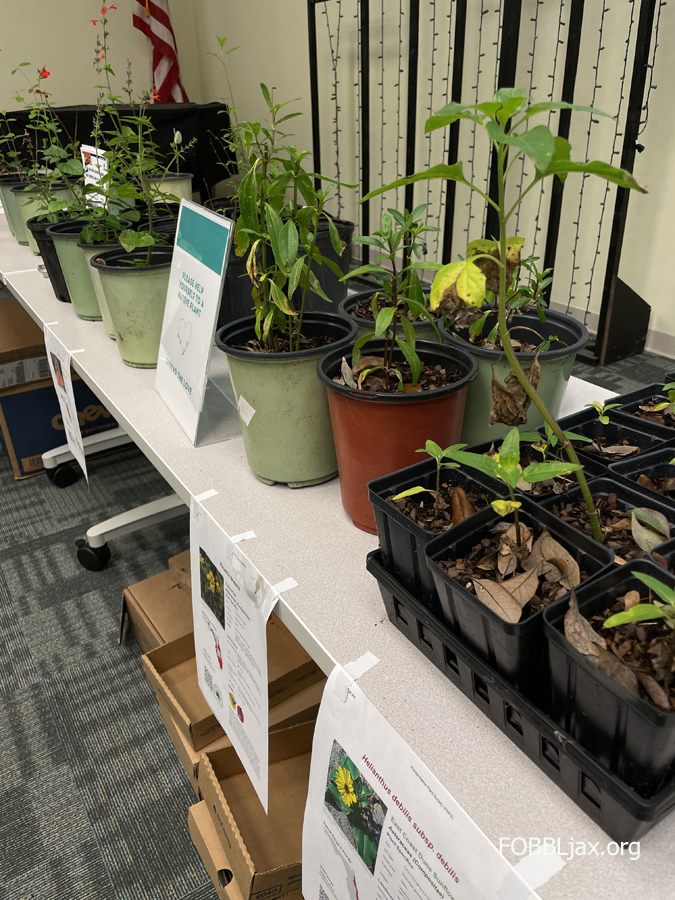
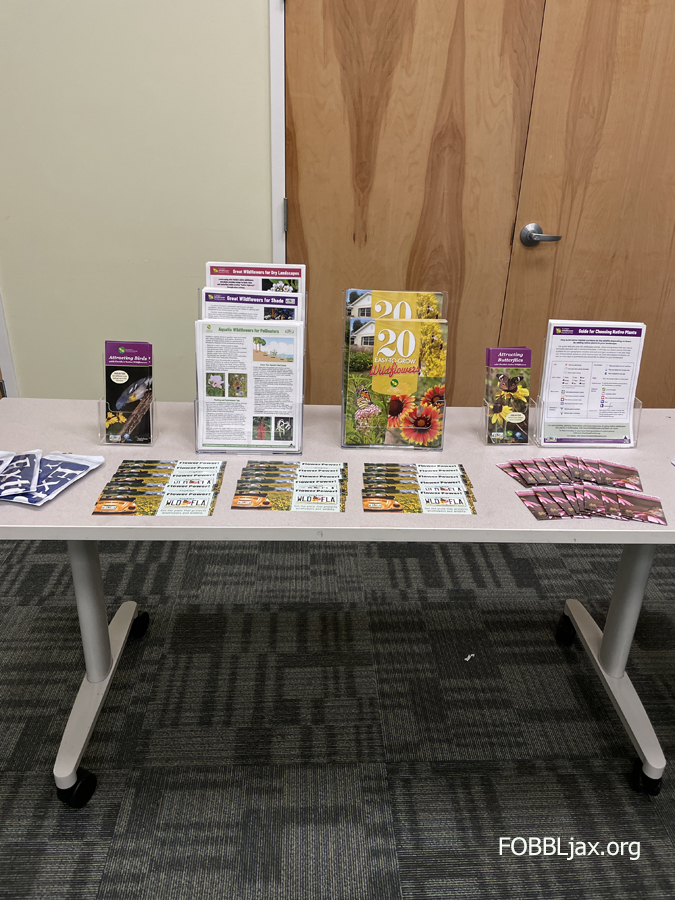
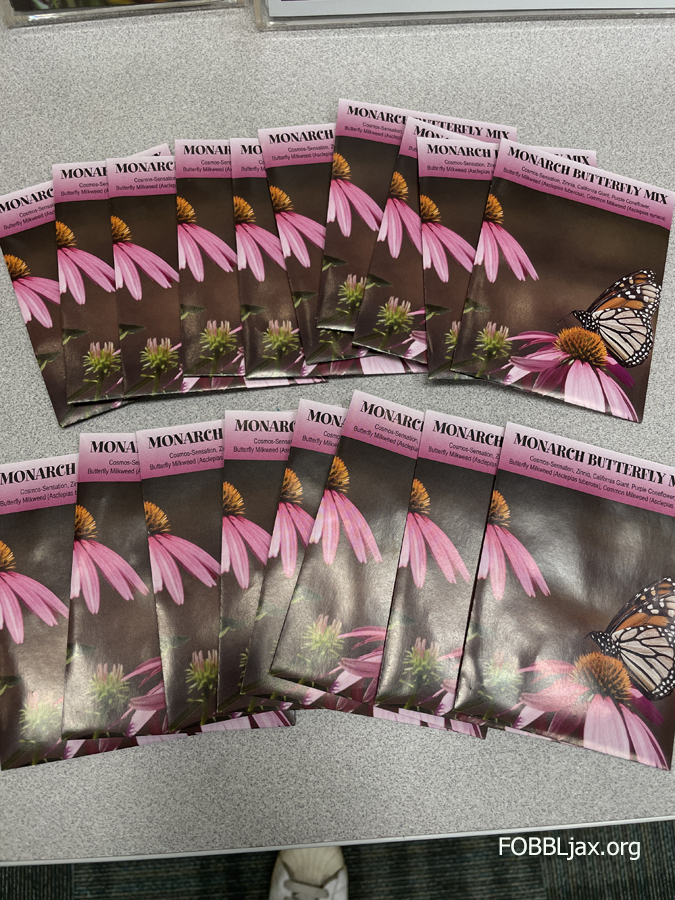
Last night Master Gardener Amy Franqui gave a Life Lit talk at the Beaches Library about invasive plants and attendees were treated to free seeds, informative handouts and entire plants to take home.
Yard Invaders: Spot Them, Stop Them, Swap Them!
Do you know what kind of invasive plants are lurking in your yard? Invasive plants are non-native species that have the ability to thrive and spread aggressively, often outcompeting native plants and disrupting ecosystems.
These plants can cause harm to the environment, economy, or human health, and their rapid proliferation can be difficult to control. Typically, invasive plants have been introduced to a new area either intentionally or accidentally, and they tend to lack natural predators or controls that would keep them in check in their native habitats.
Due to their detrimental impact, efforts are often made to manage and control these species to protect the balance of local ecosystems.
Common Invasive Plants in Florida
- Brazilian Pepper Tree (Schinus terebinthifolius): This invasive plant is native to Brazil, Argentina, and Paraguay. It was introduced to Florida in the 1800s as an ornamental plant, but it has since spread aggressively, outcompeting native vegetation.
- Melaleuca (Melaleuca quinquenervia): Native to Australia, this invasive tree was introduced to Florida in the early 1900s for its ornamental value and as a means to drain swamplands. However, it has since become a major problem, forming dense stands and altering natural ecosystems.
- Australian Pine (Casuarina equisetifolia): Despite its name, this tree is not a true pine. It was brought to Florida in the late 1800s to stabilize soil and provide shade, but it has since invaded coastal areas, outcompeting native species.
- Old World Climbing Fern (Lygodium microphyllum): This invasive vine from Africa and Asia forms dense mats that smother native vegetation in Florida’s natural areas. It is a fast-growing and aggressive invader, posing a threat to native biodiversity.
- Coral Ardisia (Ardisia crenata): Also known as the Coralberry or Spiceberry, this plant is native to Asia. It was introduced as an ornamental plant but has escaped cultivation, invading natural areas and displacing native flora.
Amy Franqui has done several Life Lits and they are always well-attended and informative. If you enjoy gardening or improving your yard, you won’t want to miss her Life Lit chats!
Discover more from Friends of the Beaches Branch Library
Subscribe to get the latest posts sent to your email.
 Friends of the Beaches Branch Library
One thought on “Life Lit with Master Gardener Amy Franqui”